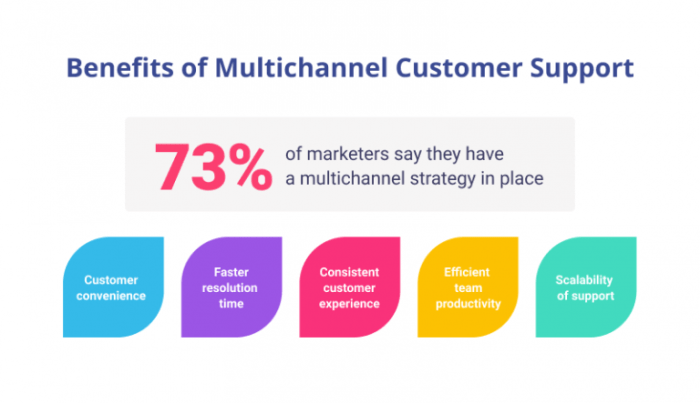
In today’s interconnected world, businesses must engage customers across multiple platforms to thrive. Multichannel customer service, encompassing phone calls, emails, social media, and more, is no longer a luxury but a necessity for maintaining a competitive edge. This guide explores the strategies, technologies, and best practices for implementing a successful multichannel approach, ultimately driving customer satisfaction and loyalty.
Effectively managing a multichannel customer service strategy requires a holistic approach, integrating various channels seamlessly to provide a unified and consistent customer experience. This involves selecting the right technologies, training staff appropriately, and establishing clear processes for handling inquiries across all platforms. Understanding key performance indicators (KPIs) is crucial for measuring success and identifying areas for improvement. This guide will delve into these aspects and more, offering a practical framework for businesses of all sizes.
Multichannel Customer Service Technologies
Effective multichannel customer service relies heavily on robust technology to manage interactions across various platforms seamlessly. This involves integrating different communication channels and utilizing software designed to streamline processes and enhance customer experience. The right technology empowers agents to provide consistent, personalized support, regardless of how the customer chooses to contact them.
The Role of CRM Software in Managing Multichannel Interactions
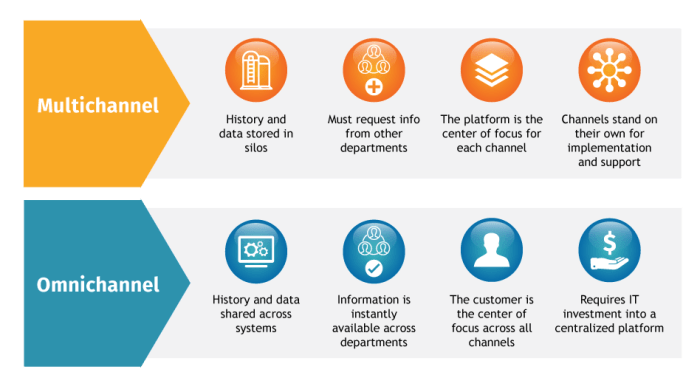
Customer Relationship Management (CRM) software serves as the central hub for managing all customer interactions, regardless of the channel. A comprehensive CRM system consolidates customer data from various sources – email, phone, social media, live chat, and more – providing a 360-degree view of each customer. This unified view allows agents to understand the customer’s history, preferences, and previous interactions, enabling them to provide more personalized and efficient service.
For example, if a customer contacts via phone after previously emailing about an issue, the agent can instantly access the email thread, saving time and preventing the need to repeat information. This enhanced context significantly improves customer satisfaction and reduces resolution times.
Key Features of Effective Multichannel Customer Service Software
Effective multichannel customer service software must offer several key features to optimize operations. These include a unified communication platform integrating all channels; robust ticketing systems for efficient case management and tracking; real-time reporting and analytics to monitor key performance indicators (KPIs) such as resolution times and customer satisfaction; integrations with other business systems like inventory management or accounting software; and features that facilitate self-service options for customers, such as knowledge bases and FAQs.
Furthermore, the software should be scalable to accommodate fluctuations in customer volume and easily adaptable to evolving business needs.
Examples of Different Types of Customer Service Software and Their Functionalities
The market offers a wide array of customer service software solutions catering to various business sizes and needs. For example, Zendesk offers a comprehensive suite of tools, including ticketing, live chat, and email management, along with robust analytics dashboards. Salesforce Service Cloud provides a scalable solution integrated with other Salesforce products, ideal for larger enterprises. Freshdesk is another popular option known for its user-friendly interface and affordability, particularly suitable for small and medium-sized businesses.
Each platform offers slightly different functionalities, focusing on specific strengths, such as omnichannel routing, AI-powered chatbots, or advanced reporting capabilities. The choice depends on the specific needs and resources of the organization.
Improving Efficiency with Automation Tools in a Multichannel Environment
Automation tools play a critical role in enhancing efficiency in multichannel customer service. Chatbots, for instance, can handle routine inquiries, freeing up human agents to focus on more complex issues. Automated routing systems intelligently direct customer inquiries to the most appropriate agent based on skills and availability. Automated email responses can acknowledge receipt of inquiries and provide initial guidance.
Workflow automation tools can streamline processes like ticket assignment and escalation, reducing manual intervention and minimizing response times. For example, a chatbot can initially gather information about a customer’s issue, pre-filling a ticket with relevant details before routing it to an agent. This significantly speeds up the resolution process and improves agent productivity.
Future Trends in Multichannel Customer Service
The landscape of customer service is undergoing a rapid transformation, driven by technological advancements and evolving customer expectations. Businesses are increasingly recognizing the need to adapt and integrate innovative solutions to maintain a competitive edge and deliver exceptional customer experiences. This necessitates a forward-looking approach to multichannel support, anticipating future trends and proactively implementing strategies to meet the demands of a digitally savvy clientele.
The convergence of various technologies and evolving customer behaviors is reshaping the future of multichannel customer service. This evolution requires businesses to adopt a proactive and adaptable approach, leveraging innovative solutions to enhance customer experience and maintain a competitive edge. Understanding these trends is crucial for companies seeking to optimize their customer service operations and ensure long-term success.
Emerging Technologies Shaping Multichannel Customer Service
Artificial intelligence (AI) and its various applications, including chatbots and virtual assistants, are rapidly transforming how businesses interact with their customers. AI-powered systems can handle a high volume of inquiries simultaneously, providing instant responses and personalized support 24/7. Machine learning algorithms continuously improve their performance based on customer interactions, leading to increasingly accurate and efficient service. For example, companies like Sephora utilize AI-powered chatbots to answer common product questions, provide personalized recommendations, and even assist with order tracking, freeing up human agents to handle more complex issues.
Beyond chatbots, AI is also enhancing other channels, such as improving the accuracy and speed of email responses through automated routing and intelligent summarization.
The Impact of Omnichannel Strategies on Customer Experience
Omnichannel strategies aim to create a seamless and integrated customer experience across all touchpoints. This involves unifying various channels—such as websites, mobile apps, social media, email, and phone—to provide a consistent brand experience regardless of how the customer chooses to interact. Successful omnichannel implementation allows customers to easily switch between channels without losing context or repeating information. For instance, a customer might start a support request on the company website’s live chat, then seamlessly transition to a phone call with a representative if needed, with all previous interactions readily available to the agent.
This seamless transition enhances customer satisfaction and loyalty by offering flexibility and convenience.
Evolving Customer Expectations in Multichannel Support
Customers increasingly expect instant, personalized, and proactive support. They want to engage with businesses through their preferred channels, receiving consistent and efficient service regardless of the method used. The rise of social media has further amplified this expectation, with customers often publicly voicing their experiences, both positive and negative. For example, the expectation of 24/7 availability is becoming the norm, particularly for younger demographics who are accustomed to instant gratification through digital platforms.
Businesses that fail to meet these evolving expectations risk losing customers to competitors who provide a superior multichannel experience. Proactive support, such as anticipating customer needs and offering assistance before they even reach out, is also becoming a key differentiator.
Challenges and Opportunities in Adapting to Future Trends
Adapting to these trends presents both challenges and opportunities. Businesses need to invest in new technologies, train their employees, and integrate various systems to deliver seamless omnichannel experiences. Data security and privacy are also critical concerns, especially when dealing with sensitive customer information. However, the potential rewards are significant. Improved customer satisfaction, increased efficiency, and enhanced brand loyalty are just some of the benefits that companies can achieve by embracing these advancements.
For example, the opportunity to gather valuable customer data through interactions across various channels allows businesses to personalize marketing efforts and product development, leading to increased customer lifetime value. The challenge lies in balancing the investment in new technologies with the need to maintain human interaction and empathy in customer service.
Successfully implementing a multichannel customer service strategy requires careful planning, technological investment, and a commitment to providing exceptional customer experiences across all touchpoints. By understanding the benefits, challenges, and best practices Artikeld in this guide, businesses can create a unified and efficient system that fosters customer loyalty, drives retention, and ultimately contributes to overall business success. The future of customer service is multichannel, and those who adapt and excel will be well-positioned for continued growth and market leadership.
FAQ
What is the difference between multichannel and omnichannel customer service?
Multichannel offers various communication channels, but they operate independently. Omnichannel integrates these channels for a unified customer experience.
How can I measure the ROI of my multichannel customer service investment?
Track KPIs like customer satisfaction (CSAT), Net Promoter Score (NPS), resolution time, and cost per interaction. Compare these metrics before and after implementing the multichannel strategy.
What are some common challenges in implementing a multichannel strategy?
Challenges include integrating different systems, ensuring consistent messaging across channels, managing increased workload, and maintaining data privacy.
How can I ensure consistent brand messaging across all channels?
Develop clear brand guidelines, utilize a centralized content management system, and provide consistent training for all customer service representatives.


