Navigating the ever-evolving landscape of customer expectations requires a proactive and adaptable approach. Customer Service Strategies for 2024 delves into the key trends shaping the future of customer interaction, from leveraging AI-powered solutions to prioritizing personalized experiences. This exploration will equip businesses with the insights needed to enhance customer satisfaction, boost loyalty, and ultimately drive success in the coming year.
We’ll examine the crucial shift towards omnichannel support, the ethical considerations of data-driven personalization, and the importance of measuring and improving performance through key metrics. Understanding how to anticipate customer needs, resolve issues efficiently, and foster lasting relationships will be central to our discussion. The goal is to provide a practical framework for implementing effective customer service strategies that deliver tangible results.
Proactive Customer Service

In today’s competitive landscape, proactive customer service is no longer a luxury but a necessity for businesses aiming to foster loyalty and drive growth. By anticipating customer needs and addressing potential issues before they arise, companies can significantly improve customer satisfaction, reduce support costs, and enhance their brand reputation. This approach shifts the focus from reactive problem-solving to preventative care, building stronger relationships with customers and demonstrating a genuine commitment to their well-being.Proactive customer service relies heavily on leveraging data and technology to understand customer behavior and predict future needs.
This involves analyzing past interactions, purchase history, website activity, and feedback to identify patterns and potential pain points. This information then informs strategies for proactively reaching out to customers with personalized solutions, offers, or support. The goal is to create a seamless and positive customer experience, even before a problem occurs.
Designing a System for Anticipating Customer Needs
A robust system for anticipating customer needs requires a multi-faceted approach. First, comprehensive data collection is crucial. This involves integrating data from various sources, such as CRM systems, website analytics, and customer feedback surveys. This data should then be analyzed using sophisticated tools and techniques, such as machine learning algorithms, to identify trends and predict future customer behavior.
For example, if a customer frequently purchases a particular product nearing its expiration date, the system could proactively send a reminder to repurchase, preventing potential stockouts and customer frustration. Finally, the system should be designed to trigger automated actions based on predefined rules and thresholds. This could include sending personalized email reminders, offering tailored product recommendations, or providing proactive support based on identified issues.
Developing a Proactive Outreach Strategy
Once a system for anticipating customer needs is in place, a well-defined outreach strategy is essential to effectively engage customers. This strategy should Artikel the channels to use (email, in-app messages, SMS, etc.), the timing of outreach, and the content of the messages. The key is personalization; generic messages are unlikely to resonate. Instead, messages should be tailored to the individual customer’s needs and preferences, based on the data analysis.
For instance, a customer who recently experienced a technical issue might receive a proactive follow-up email offering assistance or troubleshooting resources. Another customer who frequently interacts with a particular product category might receive a personalized offer or a preview of upcoming product releases. Regularly evaluating the effectiveness of the outreach strategy is critical to ensure its continuous improvement.
Examples of Successful Proactive Customer Service Initiatives
Many companies have successfully implemented proactive customer service initiatives. For example, online retailers often use email to send order confirmations, shipping updates, and proactive notifications about potential delays. Streaming services might proactively suggest shows or movies based on viewing history, increasing user engagement. Software companies could send proactive notifications about software updates or security patches, improving user experience and security.
Airlines might proactively offer assistance to passengers whose flights have been delayed or cancelled, mitigating potential negative experiences. These examples demonstrate how proactive service can enhance the customer journey and build stronger relationships.
Comparing the Effectiveness of Different Proactive Approaches
The effectiveness of different proactive approaches varies depending on the context and target audience. The following table provides a comparison of email, in-app messages, and personalized offers:
| Proactive Approach | Reach | Personalization | Engagement Rate |
|---|---|---|---|
| Wide reach, but can be filtered as spam | High potential for personalization, but requires segmentation | Moderately high, depending on email design and content | |
| In-app Messages | Limited to users actively using the app | High potential for contextual personalization, based on user activity | Generally high, due to immediate relevance and context |
| Personalized Offers | Targeted to specific customer segments based on behavior | High level of personalization, based on individual preferences and needs | Highly dependent on offer relevance and attractiveness |
Omnichannel Customer Support
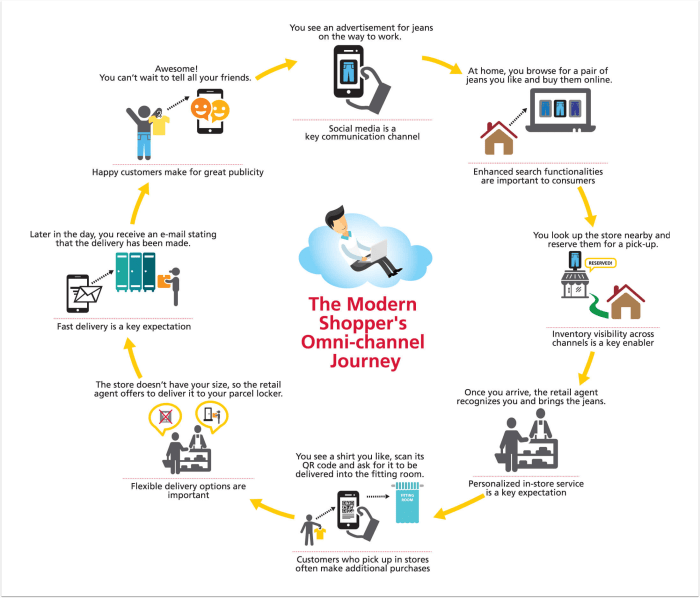
Providing seamless customer support across multiple channels is no longer a luxury; it’s a necessity for businesses aiming to thrive in today’s competitive landscape. Customers expect consistent, convenient interactions regardless of their chosen communication method, and a well-executed omnichannel strategy directly impacts customer satisfaction, loyalty, and ultimately, the bottom line.Omnichannel customer support offers a unified and personalized experience for customers, allowing them to switch between channels without losing context or repeating information.
This integrated approach streamlines interactions, improving efficiency and reducing frustration for both the customer and the support team. The benefits extend beyond improved customer experience, contributing to increased sales conversions, enhanced brand reputation, and more effective data collection for improved service optimization.
Benefits of Seamless Omnichannel Support
A truly seamless omnichannel experience provides several key advantages. Customers appreciate the flexibility to choose their preferred communication method – whether it’s a quick question via social media, a detailed explanation via email, or an immediate resolution via phone call. This flexibility leads to increased customer satisfaction and loyalty. Furthermore, having all customer interactions consolidated provides a complete view of the customer journey, enabling more personalized and proactive support.
This unified view facilitates targeted marketing efforts and allows businesses to identify and address potential issues before they escalate. Finally, omnichannel strategies can improve operational efficiency by optimizing resource allocation and reducing the need for repetitive tasks.
Challenges of Implementing an Omnichannel Strategy and Their Solutions
Implementing a successful omnichannel strategy presents several challenges. Integrating different systems and channels can be complex and costly, requiring significant investment in technology and training. Maintaining consistent branding and messaging across all channels is also crucial, demanding careful planning and execution. Furthermore, ensuring consistent service quality across different channels requires robust processes and well-trained staff. To overcome these challenges, businesses need a well-defined strategy, appropriate technology, and a dedicated team to manage and optimize the omnichannel experience.
This includes investing in a robust Customer Relationship Management (CRM) system capable of integrating various channels and providing a unified customer view. Comprehensive staff training on all channels and processes is essential, as is establishing clear service level agreements (SLAs) to ensure consistent performance.
Examples of Companies Excelling at Omnichannel Customer Support
Several companies have successfully implemented omnichannel strategies, leading to improved customer satisfaction and business growth. For example, Sephora’s omnichannel approach seamlessly integrates online and offline experiences, allowing customers to browse online, reserve items in-store, and receive personalized recommendations across channels. Similarly, Amazon’s robust omnichannel strategy leverages various channels, including its website, mobile app, social media, and physical stores, providing a highly integrated and convenient shopping experience.
Their success stems from a highly integrated technology infrastructure, allowing for seamless transitions between channels and consistent brand messaging. These companies demonstrate the potential for omnichannel strategies to enhance customer loyalty and drive sales.
Customer Journey Flowchart Across Different Channels
The flowchart would visually represent a customer’s journey, starting with a problem or need. The customer could initiate contact through various channels (e.g., website chat, email, social media, phone). The flowchart would show how the interaction is handled, highlighting the seamless transfer between channels if needed. For example, a customer might start with a question on social media, then be transferred to a live chat agent, and finally receive a follow-up email with further information.
The flowchart would clearly depict how the system ensures context is maintained throughout the interaction, regardless of the channel used. It would also showcase the integration points between different systems and how information is shared across departments to provide a holistic customer experience. This visual representation emphasizes the smooth and consistent flow of communication, regardless of the channel used by the customer.
Personalization and Customer Experience
In today’s competitive landscape, delivering exceptional customer experiences is paramount. Personalization plays a crucial role in achieving this, moving beyond generic interactions to create meaningful connections that foster loyalty and advocacy. By understanding individual customer needs and preferences, businesses can tailor their service to resonate deeply, leading to increased customer satisfaction and ultimately, business success.Personalization is not merely about addressing a customer by name; it’s about creating a tailored experience across every touchpoint.
This involves understanding their past interactions, purchase history, preferences, and even their communication style to anticipate their needs and offer relevant solutions. This approach builds trust and strengthens the customer relationship, turning one-time buyers into loyal advocates.
Gathering Customer Data Ethically
Ethical data collection is fundamental to successful personalization. Transparency is key; customers should understand how their data is being collected and used. This requires clear and concise privacy policies, readily available to customers. Data should be collected only with explicit consent, and individuals should have control over their data, including the ability to access, correct, or delete it.
Methods for gathering data ethically include offering incentives for participation in surveys or feedback programs, utilizing website analytics to understand browsing behavior (while respecting privacy), and leveraging CRM systems to track interactions and preferences responsibly. Data breaches must be avoided through robust security measures. Compliance with regulations like GDPR and CCPA is mandatory.
Examples of Successful Personalized Customer Service
A successful example is a clothing retailer that uses past purchase history to recommend relevant new items. If a customer frequently buys athletic wear, the retailer might send personalized emails featuring new running shoes or workout apparel. Another example is a streaming service that uses viewing history to suggest shows and movies that align with a customer’s preferences. This goes beyond simple algorithms; it might involve analyzing viewing patterns to infer genres the customer enjoys, even if they haven’t explicitly rated those genres.
A third example involves a bank using customer data to provide personalized financial advice or proactively alert them to potential fraudulent activity on their accounts. This demonstrates a proactive approach to customer care that builds trust and demonstrates genuine concern.
Best Practices for Personalizing Communication Across Channels
Effective personalization requires a consistent approach across all communication channels. The following best practices ensure a seamless and unified customer experience:
Maintaining a consistent brand voice and tone across all channels is crucial. This creates a recognizable and trustworthy identity for the brand, regardless of how the customer interacts with it.
- Email Marketing: Segment email lists based on customer behavior and preferences to deliver targeted messages. Use dynamic content to personalize email subject lines and body copy.
- Website Personalization: Use website analytics to understand customer behavior and tailor website content, product recommendations, and offers accordingly.
- Social Media: Respond to customer inquiries and comments promptly and personally. Tailor social media content to resonate with different customer segments.
- In-App Messaging: Utilize in-app messages to provide personalized recommendations, offers, and support based on user activity within the app.
- Live Chat: Train customer service representatives to personalize interactions by using customer data to address specific needs and preferences.
In conclusion, mastering customer service in 2024 demands a multifaceted strategy encompassing proactive engagement, seamless omnichannel support, and the ethical application of AI. By prioritizing personalization, measuring performance rigorously, and fostering customer loyalty, businesses can cultivate lasting relationships and thrive in a competitive market. The insights shared here provide a roadmap for building a customer-centric approach that drives both satisfaction and sustainable growth.
FAQ Guide
What are the biggest challenges businesses face in implementing omnichannel support?
Integrating disparate systems, ensuring consistent messaging across channels, and managing increased customer service volume are key challenges. Effective training and robust technology are crucial for overcoming these hurdles.
How can AI improve the customer experience without feeling impersonal?
AI should augment, not replace, human interaction. Use AI for tasks like initial inquiries and routine requests, reserving human agents for complex issues and personalized conversations. Transparency about AI usage also builds trust.
What are some ethical considerations when personalizing the customer experience with data?
Data privacy and transparency are paramount. Obtain explicit consent for data collection, be clear about how data is used, and provide customers with control over their data. Adherence to relevant data protection regulations is essential.


