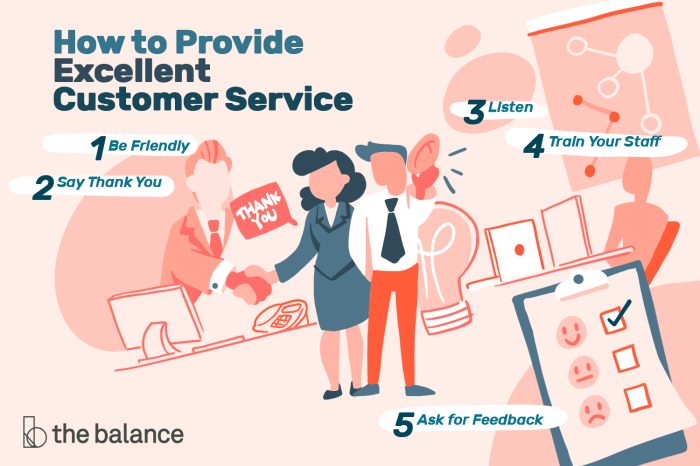
Exceptional customer service is no longer a luxury; it’s the cornerstone of thriving businesses. In today’s competitive landscape, exceeding customer expectations isn’t just about resolving issues; it’s about building lasting relationships and fostering brand loyalty. This guide delves into practical strategies and actionable steps to elevate your customer service to new heights, transforming satisfied customers into passionate advocates.
From proactive strategies to effectively handling complaints and leveraging technology, we’ll explore a comprehensive approach to customer service excellence. We’ll examine key performance indicators (KPIs), effective communication techniques, and the crucial role of training and empowerment within your customer service team. Ultimately, this guide aims to equip you with the knowledge and tools to cultivate a customer-centric culture that drives sustainable growth.
Defining Customer Service Excellence
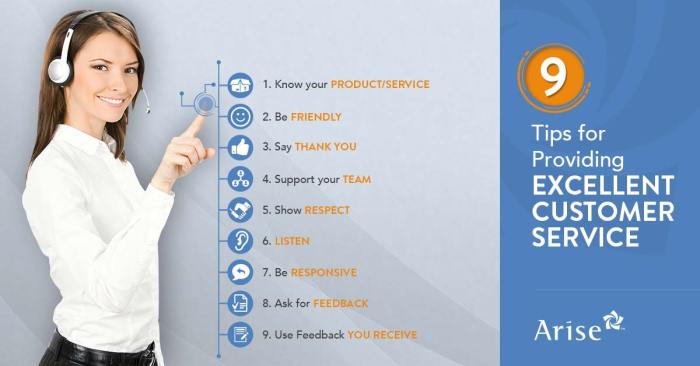
Customer service excellence is more than just meeting customer needs; it’s about exceeding expectations and fostering lasting relationships that drive business growth. It’s a proactive and holistic approach that prioritizes customer satisfaction and loyalty, ultimately contributing to a strong brand reputation and increased profitability. This goes beyond simply resolving issues; it involves anticipating needs, providing personalized experiences, and creating a positive and memorable interaction at every touchpoint.Excellent customer service is characterized by several key attributes that work together to create a superior customer experience.
These characteristics are not mutually exclusive and often overlap, reinforcing each other to create a powerful impact.
Key Characteristics of Excellent Customer Service
The hallmarks of excellent customer service revolve around exceeding customer expectations. This involves a commitment to empathy, efficiency, and proactive problem-solving. Customers value feeling understood and valued, and efficient service reduces frustration. Proactive problem-solving demonstrates a commitment to preventing issues before they arise. For example, a company might proactively contact customers to address potential shipping delays, preventing negative reviews and showcasing their commitment to customer satisfaction.
Another example is a company that anticipates customer needs by providing self-service options like FAQs or online chatbots, reducing wait times and providing immediate solutions. This proactive approach significantly improves customer experience and loyalty.
Measuring Customer Service Excellence
Establishing a robust framework for measuring customer service excellence is crucial for continuous improvement. This involves identifying and tracking key performance indicators (KPIs) that reflect the effectiveness of customer service strategies. These KPIs should be aligned with business objectives and provide actionable insights.
| KPI | Description | Measurement Method | Example Target |
|---|---|---|---|
| Customer Satisfaction (CSAT) Score | Measures overall customer satisfaction with the service received. | Surveys, feedback forms | 90% or higher |
| Net Promoter Score (NPS) | Measures customer loyalty and willingness to recommend the business. | Surveys | 70 or higher |
| Average Handling Time (AHT) | Measures the average time spent resolving a customer issue. | Call center data, ticketing system | Under 5 minutes |
| First Call Resolution (FCR) Rate | Measures the percentage of issues resolved on the first contact. | Call center data, ticketing system | 80% or higher |
| Customer Effort Score (CES) | Measures how much effort customers had to expend to resolve their issue. | Surveys | 90% or higher |
These KPIs provide a quantitative measure of customer service performance. Analyzing these metrics over time allows businesses to identify trends, pinpoint areas for improvement, and measure the effectiveness of implemented changes. For instance, a decrease in CSAT scores might indicate a need to review training materials for customer service representatives, or to improve processes for resolving specific types of issues.
Similarly, a low FCR rate might highlight the need for improved knowledge bases or more effective training on troubleshooting common problems. The continuous monitoring and analysis of these KPIs are essential for maintaining and improving customer service excellence.
Proactive Customer Service Strategies
Proactive customer service focuses on anticipating and addressing customer needs before they escalate into problems. This approach shifts the focus from reacting to issues to preventing them, leading to increased customer satisfaction, loyalty, and ultimately, business success. By understanding customer behavior and potential pain points, businesses can implement strategies to create a smoother, more positive experience.Proactive customer service offers significant advantages over a reactive approach.
Instead of simply responding to complaints, proactive strategies aim to create a positive experience from the outset. This leads to stronger customer relationships, reduced support costs, and increased efficiency across the board. A proactive approach demonstrates a genuine commitment to customer well-being, fostering trust and loyalty.
Examples of Proactive Customer Service Strategies
Several effective strategies can be employed to proactively address customer needs. These include personalized communication based on past interactions and purchase history, providing helpful resources such as FAQs and tutorials, and offering proactive support based on known issues or product usage patterns. For instance, sending a welcome email with helpful tips after a purchase, or offering troubleshooting assistance based on common problems reported with a specific product, are prime examples of proactive customer service.
Another effective strategy is to regularly survey customers to gather feedback and identify potential issues before they become widespread problems. Finally, proactively monitoring social media for mentions of your brand or product allows for quick responses to potential concerns or negative feedback, preventing these from escalating into larger issues.
Benefits of Proactive versus Reactive Customer Service
Implementing a proactive approach yields substantial benefits compared to a reactive one. A proactive strategy reduces the number of customer complaints, improves customer satisfaction scores, and enhances brand reputation. It also allows for more efficient resource allocation, as fewer resources are needed to handle escalated issues. Proactive measures often lead to increased customer loyalty and advocacy, resulting in positive word-of-mouth marketing and organic growth.
Implementing a Proactive Customer Service System: A Step-by-Step Guide
Implementing a proactive customer service system requires a structured approach. First, gather data on customer interactions and identify common pain points. Then, develop strategies to address these pain points before they become problems. Next, train your customer service team on these strategies and equip them with the necessary tools and resources. Finally, monitor the effectiveness of your proactive strategies and make adjustments as needed.
Consistent monitoring and improvement are key to maintaining a proactive and effective customer service system.
Proactive vs. Reactive Customer Service Strategies
| Strategy | Description | Benefits | Drawbacks |
|---|---|---|---|
| Personalized onboarding emails | Sending welcome emails with helpful tips and resources after a purchase. | Improved customer satisfaction, increased engagement. | Requires robust customer data and segmentation. |
| Proactive troubleshooting | Offering assistance based on common product issues or usage patterns. | Reduced support tickets, faster resolution times. | Requires accurate identification of common problems. |
| Regular customer surveys | Collecting feedback to identify potential problems before they arise. | Early detection of issues, improved product development. | Requires careful survey design and analysis. |
| Social media monitoring | Tracking brand mentions to address concerns quickly. | Improved brand reputation, quicker response to negative feedback. | Requires dedicated resources and monitoring tools. |
| Knowledge base development | Creating comprehensive FAQs and tutorials to empower customers to self-serve. | Reduced support volume, empowered customers. | Requires ongoing maintenance and updates. |
| Predictive analytics | Using data to anticipate customer needs and potential problems. | Highly personalized service, proactive issue resolution. | Requires sophisticated data analysis capabilities. |
Implementing customer service excellence isn’t a one-time fix; it’s an ongoing journey of continuous improvement. By consistently measuring customer satisfaction, analyzing feedback, and adapting your strategies, you can build a robust system that fosters loyalty, increases retention, and ultimately drives significant business success. Remember, every interaction is an opportunity to create a positive and lasting impression, turning customers into brand ambassadors.
FAQs
What is the difference between proactive and reactive customer service?
Proactive service anticipates customer needs and prevents problems, while reactive service addresses issues only after they arise. Proactive service is generally more efficient and builds stronger customer relationships.
How can I measure the effectiveness of my customer service training?
Track key metrics such as customer satisfaction scores (CSAT), Net Promoter Score (NPS), and resolution times. Observe agent performance through call recordings and customer feedback. Regular assessments and feedback sessions are crucial.
What are some low-cost ways to improve customer service?
Implement a robust knowledge base, encourage employee empowerment to resolve issues quickly, personalize communications, and actively solicit customer feedback. Focus on improving internal communication and processes first.
How can I handle difficult customers effectively?
Listen empathetically, validate their feelings, and remain calm and professional. Focus on finding a solution that addresses their concerns. If necessary, escalate the issue to a supervisor.


