Mastering the art of handling customer complaints is crucial for any business striving for success. A well-managed complaint can transform a negative experience into an opportunity to strengthen customer relationships and improve services. This guide provides a structured approach to effectively address customer concerns, fostering loyalty and driving business growth. It explores the nuances of understanding various complaint types, responding empathetically, and escalating complex issues appropriately.
Ultimately, the goal is to not only resolve immediate issues but also to prevent future complaints through proactive measures and continuous improvement.
From identifying the root causes of dissatisfaction to implementing proactive strategies, we will delve into practical techniques and tools to navigate the complexities of customer service. We will cover everything from active listening and empathetic responses to effective escalation procedures and strategies for turning negative experiences into positive ones. This guide equips you with the knowledge and skills to build strong customer relationships based on trust and mutual understanding.
Understanding Customer Complaints
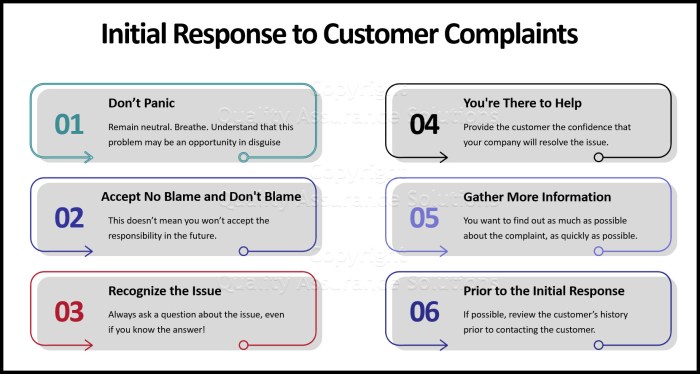
Effectively handling customer complaints is crucial for maintaining a positive brand image and fostering customer loyalty. Understanding the nature of these complaints and the reasons behind them is the first step towards resolving them efficiently and professionally. This section will explore common complaint types, the importance of active listening, and a structured approach to receiving and documenting complaints.Understanding the root causes of customer dissatisfaction is paramount.
Ignoring these underlying issues can lead to recurring problems and damage your reputation.
Common Complaint Types and Root Causes
Many customer complaints fall into predictable categories. These categories, and their underlying causes, can be grouped to aid in identifying patterns and improving services. For example, complaints about product quality often stem from manufacturing defects, poor design, or inadequate quality control. Complaints about customer service, on the other hand, might be caused by unhelpful staff, long wait times, or unclear communication.
Finally, complaints regarding pricing often reflect a perceived lack of value for money or unfair pricing practices compared to competitors. By analyzing the frequency of these complaint types, businesses can pinpoint areas needing improvement.
Active Listening in Complaint Handling
Active listening is not merely hearing what a customer says; it’s about fully understanding their perspective, emotions, and the context of their complaint. This involves paying close attention to both verbal and nonverbal cues, asking clarifying questions, and summarizing the customer’s concerns to ensure mutual understanding. Active listening demonstrates empathy and respect, which can significantly de-escalate a tense situation and build rapport with the dissatisfied customer.
For example, noticing a customer’s raised voice or frustrated body language might signal the need for a more empathetic and patient approach. Conversely, a calm and collected demeanor from the customer may allow for a more direct and efficient resolution.
A Step-by-Step Process for Receiving and Documenting Customer Complaints
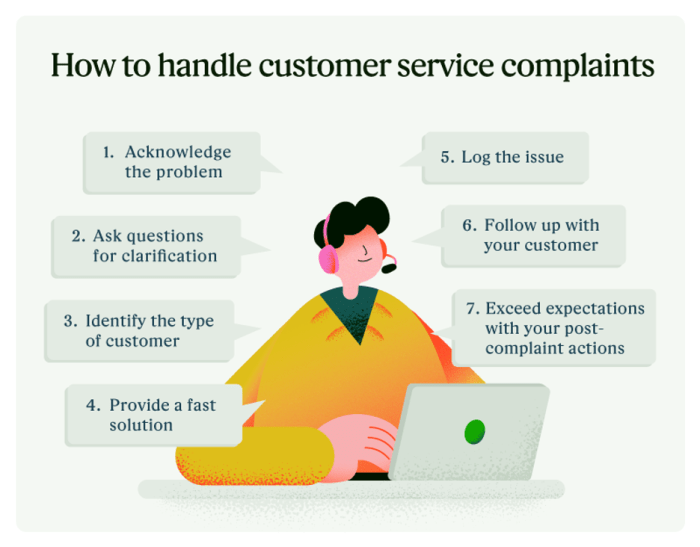
A systematic approach to handling complaints ensures consistency and thoroughness. First, greet the customer professionally and create a calm environment. Next, actively listen to their complaint, allowing them to fully explain their issue without interruption. Then, summarize the complaint to confirm understanding and demonstrate empathy. Following this, apologize for the inconvenience, regardless of who is at fault; this shows goodwill and fosters a positive interaction.
Finally, document the complaint thoroughly, including the customer’s name, contact information, the date and time of the complaint, a detailed description of the issue, and the actions taken to resolve it. This documentation is vital for tracking trends, identifying systemic problems, and improving customer service processes. For example, a well-documented complaint might include a verbatim transcript of the conversation, notes on the customer’s emotional state, and a clear timeline of actions taken, along with the final resolution and customer feedback.
Escalating and Resolving Complex Complaints
Handling customer complaints effectively is crucial for maintaining a positive brand image and fostering customer loyalty. While many complaints can be resolved at the initial point of contact, some require escalation to a supervisor or manager for a more comprehensive and efficient resolution. This section Artikels the process of escalating complex complaints and explores various resolution strategies.
Identifying Situations Requiring Escalation
Escalation becomes necessary when a customer complaint involves issues beyond the scope of a frontline representative’s authority or expertise. This might include situations involving significant financial implications, policy violations, complaints requiring specialized technical knowledge, or those involving persistent dissatisfaction despite initial attempts at resolution. For example, a customer disputing a large charge on their account, a complaint alleging unethical behavior by a company representative, or a technical issue requiring a deep understanding of software architecture would necessitate escalation.
The key is recognizing when a situation requires expertise or authority beyond the immediate level of support.
Escalation Process and Maintaining Customer Satisfaction
A smooth escalation process is key to maintaining customer satisfaction. It should involve clearly communicating the situation to the supervisor or manager, providing all relevant documentation (emails, notes from previous interactions), and keeping the customer informed throughout the process. Transparency is paramount. The customer should understand why escalation is necessary, what steps are being taken, and the expected timeframe for resolution.
Regular updates, even if only to acknowledge receipt of the complaint and ongoing investigation, can significantly improve the customer experience. For instance, a short email acknowledging receipt of the escalated complaint and promising a response within 24 hours demonstrates proactive engagement and helps to manage customer expectations.
Comparing Complaint Resolution Strategies
Different complaint resolution strategies exist, each with its own strengths and weaknesses. Negotiation involves finding a mutually agreeable solution; mediation involves a neutral third party facilitating communication; arbitration involves a neutral third party making a binding decision; and litigation involves resolving the dispute through a court of law. Negotiation is often the first and preferred approach, as it is efficient and preserves the relationship.
Mediation can be helpful when the parties are unable to reach an agreement on their own. Arbitration and litigation are typically reserved for more serious or intractable disputes. The choice of strategy depends on the nature of the complaint, the relationship with the customer, and the potential costs and risks involved.
Escalation Procedures Based on Complaint Severity
The following table Artikels escalation procedures based on the severity of the customer complaint:
| Complaint Severity | Initial Response | Escalation Level | Timeframe for Resolution |
|---|---|---|---|
| Low (Minor inconvenience) | Frontline representative resolves directly | None | Immediate to 24 hours |
| Medium (Significant inconvenience, requires investigation) | Frontline representative attempts resolution, documents thoroughly | Team Lead/Supervisor | 24-72 hours |
| High (Financial implications, policy violation, potential legal ramifications) | Frontline representative documents, escalates immediately | Manager/Department Head | 72 hours – 5 business days |
| Critical (Significant reputational damage, urgent safety concern) | Immediate escalation to senior management | Senior Management/Executive Team | Immediate action required |
Preventing Future Complaints
Proactive measures are crucial for minimizing customer complaints. By focusing on prevention rather than solely reaction, businesses can significantly improve customer satisfaction and loyalty, ultimately boosting their bottom line. This involves a multi-faceted approach encompassing improved processes, enhanced communication, and a commitment to continuous improvement.Preventing customer complaints requires a proactive strategy focused on understanding customer needs and expectations. This goes beyond simply reacting to issues; it involves anticipating potential problems and implementing solutions before they arise.
Regular feedback collection and analysis are vital components of this strategy, allowing businesses to identify and address areas of concern before they escalate into full-blown complaints.
Regular Customer Feedback Collection
Collecting regular customer feedback is paramount to understanding customer needs and identifying potential problems. This feedback can be gathered through various channels, including surveys, online reviews, social media monitoring, and direct customer interactions. Analyzing this data reveals trends and patterns that indicate areas needing improvement. For example, consistently negative feedback regarding slow shipping times might indicate a need for process optimization in the logistics department.
Similarly, recurring complaints about unhelpful customer service representatives could signal a need for enhanced training programs. The key is to actively solicit feedback and analyze it to inform proactive changes.
Checklist for Identifying Potential Problem Areas
A structured approach to identifying potential problem areas is essential. This checklist can help businesses proactively address issues before they lead to complaints.
- Product Quality: Regularly review product defect rates, customer returns, and warranty claims. Identify common issues and implement corrective actions.
- Service Delivery: Analyze customer service response times, resolution rates, and customer satisfaction scores. Address delays and inefficiencies.
- Communication: Evaluate the clarity and effectiveness of communication channels, including website content, marketing materials, and customer service interactions. Ensure consistent messaging and easy-to-understand information.
- Pricing and Billing: Review pricing structures for fairness and transparency. Ensure accurate billing and address any billing discrepancies promptly.
- Website/App Usability: Conduct regular usability testing to identify navigation issues, broken links, or confusing information on your website or app.
Examples of Successful Customer Service Recovery Programs
Several companies have implemented successful customer service recovery programs that demonstrate the value of proactive complaint prevention. For instance, a well-known airline implemented a proactive communication system, sending automated updates to passengers about flight delays or cancellations, thus managing expectations and preventing potential frustration. Another example is a major retailer that established a robust online returns system, making the process easy and hassle-free for customers, reducing the likelihood of negative reviews or complaints.
These programs show that investing in proactive measures not only prevents complaints but also enhances customer loyalty and positive brand perception.
Customer Service and Customer Retention Strategies
Effective complaint handling is intrinsically linked to customer retention. Addressing complaints swiftly and fairly demonstrates a commitment to customer satisfaction, fostering loyalty and encouraging repeat business. Conversely, poor complaint handling can lead to customer churn and negative word-of-mouth, significantly impacting a business’s bottom line.Handling complaints effectively is crucial for turning negative experiences into positive ones and building lasting customer relationships.
By demonstrating empathy, taking responsibility, and offering a fair resolution, businesses can transform a potentially damaging situation into an opportunity to strengthen customer bonds. This proactive approach not only retains existing customers but can also generate positive reviews and referrals.
Turning Negative Experiences into Positive Ones
Transforming a negative customer experience requires a multi-faceted approach. Firstly, acknowledge the customer’s feelings and validate their concerns. Avoid becoming defensive; instead, actively listen and empathize with their frustration. Secondly, take ownership of the problem, even if it wasn’t directly caused by your company. A sincere apology goes a long way.
Thirdly, offer a tangible solution – this could be a refund, replacement, discount, or other form of compensation. Finally, follow up with the customer to ensure they are satisfied with the resolution. For example, a customer receiving a damaged product might be offered a replacement and a small gift as a token of apology. This shows a genuine commitment to rectifying the issue and exceeding expectations.
Building Trust and Loyalty After a Complaint
Rebuilding trust after a complaint requires consistent effort and genuine commitment. Transparency is key; clearly explain the steps taken to resolve the issue and prevent similar occurrences in the future. Regular communication keeps the customer informed and demonstrates your dedication to their satisfaction. Consider offering loyalty programs or exclusive benefits to demonstrate appreciation for their continued business, even after a negative experience.
For instance, a company could offer a free service upgrade or exclusive access to upcoming sales to demonstrate their commitment to retaining the customer.
Using Customer Feedback to Improve Products and Services
Customer feedback, including complaints, is invaluable for improving products and services. Analyze complaints to identify recurring issues and areas for improvement. This data can inform product development, service enhancements, and training programs for staff. For example, frequent complaints about a website’s navigation could lead to a redesign, improving user experience and reducing future complaints. Actively soliciting feedback, through surveys or feedback forms, allows for proactive identification of potential problems before they escalate into major issues.
Strategies for Improving Customer Service and Retention
Effective customer service and retention require a holistic approach encompassing several key strategies:
- Proactive Communication: Keep customers informed about order status, delays, and any relevant updates.
- Empowered Employees: Equip staff with the authority to resolve issues quickly and efficiently.
- Personalized Service: Tailor interactions to individual customer needs and preferences.
- Multiple Communication Channels: Offer various ways for customers to contact you (phone, email, chat).
- Regular Feedback Collection: Actively solicit feedback through surveys, reviews, and feedback forms.
- Continuous Improvement: Regularly analyze feedback and implement changes to improve products and services.
- Loyalty Programs: Reward loyal customers with exclusive benefits and discounts.
- Complaint Resolution Process: Establish a clear and efficient process for handling complaints.
Visual Aids for Training
Effective visual aids are crucial for reinforcing training on customer complaint handling. They help trainees grasp complex concepts and remember key procedures more easily, ultimately improving their performance and contributing to better customer service. Strong visuals can transform abstract ideas into concrete, memorable lessons.Visual aids should be clear, concise, and directly related to the training objectives. Using a variety of visual types—charts, graphs, flowcharts, and even compelling illustrations—can cater to different learning styles and maintain engagement.
A Visual Depicting the Impact of Unresolved Complaints on Customer Retention
Imagine a graph charting customer retention over time. The x-axis represents time in months, and the y-axis represents the percentage of customers retained. The line starts high, indicating a strong initial retention rate. However, as time progresses, the line begins a steady decline. Superimposed on this graph are several downward spikes, each clearly labeled with the number of unresolved customer complaints during that period.
These spikes directly correspond to significant drops in the retention rate line, visually demonstrating the negative correlation between unresolved complaints and customer loyalty. The overall message is clear: unresolved complaints directly lead to customer churn.
A Flowchart Illustrating the Complaint Handling Process
The flowchart begins with a “Complaint Received” box. This branches into two paths: “Simple Complaint” and “Complex Complaint.” The “Simple Complaint” path flows through boxes representing “Acknowledge Complaint,” “Offer Solution,” “Implement Solution,” “Follow Up,” and finally “Close Complaint.” The “Complex Complaint” path leads to boxes for “Escalate to Supervisor,” “Investigate Issue,” “Develop Solution,” “Implement Solution,” “Follow Up,” and “Close Complaint.” Both paths converge at a final “Complaint Resolved” box, emphasizing that all complaints, regardless of complexity, require a resolution.
Each box can contain brief descriptions or action steps to further clarify the process. Arrows clearly indicate the flow between each step, creating a visually clear and easy-to-understand guide for handling complaints effectively.
Successfully navigating customer complaints requires a blend of empathy, efficiency, and proactive problem-solving. By understanding the root causes of complaints, responding thoughtfully, and implementing preventative measures, businesses can transform negative interactions into opportunities for growth and improved customer relationships. This guide provides a framework for building a robust customer complaint handling system, ultimately leading to increased customer satisfaction, loyalty, and a stronger brand reputation.
Remember, each complaint presents a chance to learn, adapt, and enhance your customer service approach for long-term success.
FAQ Explained
What should I do if a customer is being abusive or aggressive?
Remain calm and professional. Clearly state your company’s policies regarding abusive behavior. If the situation escalates, disconnect the call or end the interaction and involve a supervisor.
How long should it take to resolve a customer complaint?
The timeframe depends on the complexity of the issue. Aim for quick resolutions for simple problems, and provide regular updates on complex issues, setting realistic expectations.
What if I can’t solve a customer’s problem?
Clearly explain the limitations and escalate the issue to a supervisor or appropriate department, keeping the customer informed of the process and timeline.
How can I track customer complaints effectively?
Utilize a CRM system or dedicated complaint tracking software to document complaints, their resolutions, and customer feedback. This data can help identify trends and improve future service.


