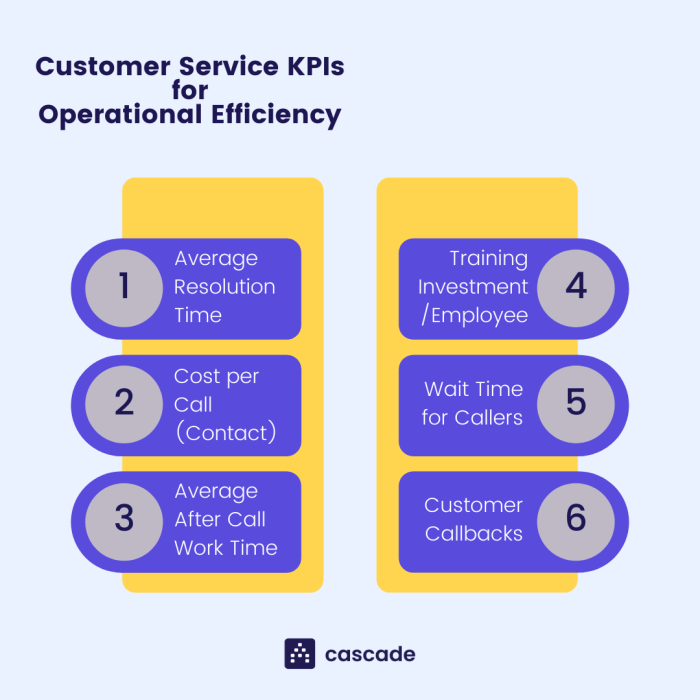
Understanding and effectively utilizing customer service KPIs and metrics is crucial for any business aiming for sustainable growth. These key performance indicators provide invaluable insights into the efficiency and effectiveness of customer service operations, allowing for data-driven improvements and ultimately, enhanced customer satisfaction and increased revenue. This guide delves into the core metrics, offering practical strategies for implementation and analysis.
We’ll explore various methods for measuring customer satisfaction, analyzing interactions across different channels, and leveraging technology to optimize the customer journey. Furthermore, we’ll examine the direct correlation between excellent customer service and increased customer retention, ultimately demonstrating how improvements in this area translate to tangible financial benefits.
Defining Key Customer Service KPIs and Metrics
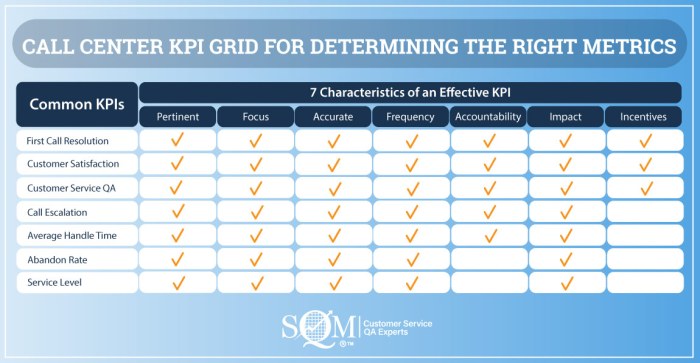
Understanding and tracking key performance indicators (KPIs) is crucial for evaluating the effectiveness and efficiency of a customer service operation. By monitoring these metrics, businesses can identify areas for improvement, optimize processes, and ultimately enhance customer satisfaction and loyalty. This section will define several essential KPIs and metrics, categorized for clarity, along with their calculation methods and typical industry benchmarks.
Categorization of Key Customer Service KPIs and Metrics
Customer service KPIs and metrics can be broadly categorized into three main areas: efficiency, effectiveness, and customer satisfaction. Efficiency metrics focus on how quickly and cost-effectively service is delivered. Effectiveness metrics measure how well the service resolves customer issues. Finally, customer satisfaction metrics gauge the overall customer experience. A balanced approach, monitoring all three categories, provides a comprehensive view of customer service performance.
Efficiency Metrics
Efficiency metrics focus on the operational aspects of customer service. They highlight how effectively resources are used to handle customer interactions.
| KPI | Definition | Calculation Method | Industry Benchmark (Example) |
|---|---|---|---|
| Average Handling Time (AHT) | The average time spent on a single customer interaction. | (Total handle time for all interactions) / (Total number of interactions) | Under 5 minutes (varies significantly by industry) |
| First Call Resolution (FCR) | The percentage of customer issues resolved on the first contact. | (Number of issues resolved on first contact) / (Total number of contacts) – 100% | 70-80% (varies significantly by industry and issue complexity) |
| Cost per Contact | The average cost associated with each customer interaction. | (Total cost of customer service) / (Total number of contacts) | Varies greatly depending on staffing models and technology. Benchmarking requires internal comparisons over time or against similar organizations. |
| Customer Service Representative (CSR) Occupancy | The percentage of time CSRs are actively engaged with customers. | (Total time spent handling interactions) / (Total available time) – 100% | 70-80% (a higher percentage may indicate insufficient staffing, while a lower percentage may indicate underutilization) |
Effectiveness Metrics
Effectiveness metrics measure the quality of service provided and the impact on customer issues. These metrics go beyond speed and focus on the successful resolution of problems.
| KPI | Definition | Calculation Method | Industry Benchmark (Example) |
|---|---|---|---|
| Customer Effort Score (CES) | Measures how much effort a customer had to exert to resolve their issue. | Based on a survey asking customers to rate the effort required on a scale (e.g., 1-7). Average score calculated. | High scores (e.g., above 4 out of 7) indicate low customer effort. Benchmarks are relative to the specific survey and company. |
| Resolution Time | The time taken to resolve a customer issue from initial contact. | (Total time taken to resolve all issues) / (Total number of issues) | Varies significantly by industry and issue complexity. Shorter resolution times are generally better. |
| Customer Satisfaction (CSAT) | Measures overall customer satisfaction with the service received. | Based on post-interaction surveys, typically using a rating scale (e.g., 1-5 stars). Average score calculated. | High average ratings (e.g., 4 or 5 out of 5 stars) indicate high satisfaction. Benchmarks vary across industries and companies. |
Customer Satisfaction Metrics
Customer satisfaction metrics directly reflect the customer’s perception of the service quality. These metrics are crucial for understanding customer sentiment and identifying areas for improvement. High customer satisfaction is linked to loyalty and positive word-of-mouth referrals.
| KPI | Definition | Calculation Method | Industry Benchmark (Example) |
|---|---|---|---|
| Net Promoter Score (NPS) | Measures customer loyalty and willingness to recommend a company’s services. | Based on a survey asking customers how likely they are to recommend the company on a scale of 0-
10. Calculation % Promoters – % Detractors. |
Scores above 50 are generally considered excellent. Industry averages vary significantly. |
| Customer Churn Rate | The percentage of customers who stop using a company’s services over a given period. | (Number of customers lost) / (Total number of customers at the beginning of the period) – 100% | Lower churn rates are better. Industry benchmarks vary considerably. |
| Customer Retention Rate | The percentage of customers who continue using a company’s services over a given period. | 100%
|
Higher retention rates are better. Industry benchmarks vary considerably. |
Analyzing Customer Service Interactions
Understanding how customers interact with your service channels is crucial for optimizing your support strategy. Analyzing these interactions provides valuable insights into customer needs, pain points, and the overall effectiveness of your service delivery. By examining various metrics across different channels, businesses can identify areas for improvement and enhance customer satisfaction.Analyzing different interaction types reveals how each impacts key performance indicators (KPIs).
For instance, a lengthy phone call might negatively impact average handling time (AHT), while a high volume of email inquiries could affect first response time (FRT). Conversely, efficient chat support can lead to high customer satisfaction scores (CSAT) and quick resolution times. This multifaceted analysis allows for a comprehensive understanding of customer service performance.
Impact of Interaction Type on KPIs
Phone calls, emails, and live chat each present unique challenges and opportunities. Phone calls, while allowing for immediate interaction and personalized service, often have higher AHT and require more agent training. Emails, though offering asynchronous communication and detailed information exchange, can lead to longer resolution times and potentially frustrated customers if not managed effectively. Live chat, ideal for quick questions and immediate support, might struggle with complex issues requiring extensive troubleshooting.
Analyzing the volume, resolution times, and customer satisfaction for each channel provides a detailed view of their individual contributions to overall KPI performance. For example, a high volume of phone calls resulting in long average handling times could indicate a need for improved self-service options or a more efficient call routing system.
Challenges and Opportunities in Managing Cross-Channel Interactions
Managing customer service across multiple channels presents several challenges. Maintaining consistent service quality across channels requires careful planning and execution. Ensuring agents are trained to handle inquiries across all channels efficiently is vital. Integrating different systems to provide a unified view of the customer is crucial for efficient case management and personalized service. However, the ability to offer diverse support channels also presents significant opportunities.
Multi-channel support allows businesses to cater to customer preferences, offering flexibility and convenience. It also provides richer data on customer behavior, allowing for targeted improvements in service delivery. Analyzing data across all channels helps identify trends, predict future needs, and proactively address potential issues. For example, a sudden increase in live chat inquiries about a specific product feature could indicate a problem requiring immediate attention.
Best Practices for Improving Customer Service Interactions
Effective management of customer interactions is paramount for achieving high customer satisfaction. The following best practices contribute to improving efficiency and effectiveness:
- Proactive Customer Support: Implement self-service options such as FAQs, knowledge bases, and chatbots to address common issues before they escalate.
- Efficient Routing and Assignment: Utilize intelligent routing systems to direct inquiries to the most appropriate agents based on skills and availability.
- Comprehensive Agent Training: Provide thorough training to agents on product knowledge, communication skills, and the use of support tools.
- Multi-Channel Integration: Integrate various support channels to provide a seamless and unified customer experience.
- Data-Driven Decision Making: Regularly analyze customer interaction data to identify trends, improve processes, and enhance customer satisfaction.
- Personalized Service: Leverage customer data to personalize interactions and provide tailored support.
- Continuous Improvement: Regularly review and update processes based on feedback and performance data to ensure continuous improvement.
Improving Customer Satisfaction Scores
Improving customer satisfaction is paramount for business success. High satisfaction scores translate directly into increased loyalty, positive word-of-mouth referrals, and ultimately, higher profitability. Understanding how to measure and subsequently improve these scores is a crucial skill for any customer-centric organization. This section details methods for measuring customer satisfaction and Artikels effective strategies for driving improvements.Customer satisfaction measurement provides valuable insights into customer perceptions and experiences.
By systematically collecting and analyzing this data, businesses can identify areas for improvement and implement targeted strategies to enhance the overall customer journey. Effective measurement requires a multi-faceted approach, combining various methods to gain a holistic understanding.
Customer Satisfaction Measurement Methods
Several methods exist for gauging customer satisfaction. Each offers unique advantages and disadvantages, impacting the choice of approach depending on the specific needs and resources of the organization. A balanced approach, utilizing multiple methods, often provides the most comprehensive picture.
| Method | Pros | Cons | Implementation Considerations |
|---|---|---|---|
| Surveys (e.g., CSAT, NPS) | Wide reach, quantifiable data, allows for in-depth analysis, customizable questions. | Can be lengthy, response rates can be low, potential for bias, requires careful design and analysis. | Choose appropriate survey length and question types. Utilize incentives to encourage participation. Analyze results carefully to identify trends and areas for improvement. |
| Feedback Forms (online and in-person) | Easy to implement, direct feedback, provides context to numerical scores. | Can be subjective and difficult to quantify, response rates may be low, requires careful moderation and analysis. | Ensure forms are concise and easy to complete. Provide clear instructions and appropriate channels for follow-up. Regularly review and update forms to maintain relevance. |
| Social Media Monitoring | Provides real-time feedback, identifies emerging issues, reveals customer sentiment. | Can be time-consuming to monitor, requires sophisticated tools for analysis, may contain irrelevant or biased information. | Establish clear s and hashtags for tracking. Utilize social listening tools to identify relevant conversations. Respond promptly and professionally to customer comments and concerns. |
| Customer Interviews and Focus Groups | Provides rich qualitative data, allows for in-depth understanding of customer needs and motivations. | Time-consuming and expensive, smaller sample size, potential for bias from interviewer or group dynamics. | Develop a structured interview guide or discussion plan. Recruit a diverse range of participants. Analyze responses carefully to identify key themes and insights. |
Strategies for Improving Customer Satisfaction Scores
Once customer satisfaction has been measured, actionable strategies can be implemented to address areas needing improvement. Focusing on proactive communication, personalized service, and efficient issue resolution can significantly impact customer satisfaction scores.Proactive communication involves anticipating customer needs and proactively addressing potential issues before they escalate. For example, sending a proactive email to a customer whose order is delayed, explaining the reason and offering a solution, can significantly improve their experience.
Personalized service involves tailoring interactions to meet individual customer needs and preferences. This might include remembering past interactions, offering customized product recommendations, or providing tailored support. Efficient issue resolution focuses on quickly and effectively resolving customer problems. This includes clear communication, empathetic responses, and timely follow-up. A company known for swiftly and effectively addressing customer complaints will cultivate higher satisfaction.
The Relationship Between Customer Service and Customer Retention
Exceptional customer service is not merely a desirable attribute; it’s a cornerstone of sustainable business growth. A direct and demonstrable link exists between the quality of customer service provided and the rate at which customers choose to remain loyal to a business. Investing in and prioritizing customer service translates directly into improved customer retention, leading to increased profitability and a stronger brand reputation.The correlation between excellent customer service and high customer retention rates is undeniable.
Satisfied customers are far more likely to become repeat customers and advocates for a brand. Conversely, negative experiences often lead to customer churn and negative word-of-mouth marketing, harming a company’s bottom line and reputation. By proactively addressing customer needs and exceeding expectations, businesses cultivate loyalty and reduce the costs associated with acquiring new customers.
Examples of Exceptional Customer Service Leading to Increased Loyalty
Exceptional customer service manifests in various ways, each capable of fostering customer loyalty and repeat business. Consider a company known for its proactive problem-solving. Imagine a customer experiencing a technical issue with a product; a swift and empathetic response, offering immediate solutions and showing genuine concern, significantly impacts their perception of the brand. This proactive approach, rather than a reactive one, builds trust and fosters a sense of value.
Another example might be a company that consistently goes above and beyond to personalize the customer experience. This could involve remembering customer preferences, offering tailored recommendations, or simply addressing them by name. These small gestures, accumulating over time, create a sense of connection and loyalty. A final example is a company that effectively uses customer feedback to improve its products and services.
Demonstrating a willingness to listen and adapt based on customer input shows a commitment to continuous improvement and strengthens the customer relationship.
Designing a Customer Service Strategy Focused on Enhancing Customer Retention
A customer service strategy designed to enhance retention should be proactive, data-driven, and customer-centric. It begins with clearly defined customer service goals directly tied to retention metrics. For instance, a goal might be to reduce customer churn by 15% within the next year. To achieve this, businesses should invest in comprehensive customer relationship management (CRM) systems to track customer interactions, identify at-risk customers, and personalize communication.
Proactive outreach, such as regular follow-up emails or surveys, can gauge customer satisfaction and address potential issues before they escalate. Empowering frontline staff with the authority to resolve customer issues quickly and efficiently is crucial. This reduces frustration and enhances the customer experience. Finally, regular training for customer service representatives on effective communication, empathy, and problem-solving techniques is essential to ensure consistent high-quality service.
By implementing these strategies, businesses can cultivate strong customer relationships, foster loyalty, and significantly improve customer retention rates.
Measuring the Impact of Customer Service on Revenue
Effective customer service isn’t just about happy customers; it’s a crucial driver of revenue growth. Improving customer service directly translates to increased sales, higher customer lifetime value, and ultimately, a healthier bottom line. Understanding how to quantify this impact is key to justifying investment in customer service improvements and demonstrating their ROI to stakeholders.Quantifying the financial impact of improved customer service requires a multifaceted approach.
This involves analyzing various metrics to understand the relationship between customer service interactions and revenue generation. Directly linking specific service improvements to revenue increases can be challenging, but several methods can provide valuable insights. These include tracking the correlation between customer satisfaction scores (CSAT) and repeat purchases, analyzing the impact of resolved issues on customer retention rates, and calculating the cost savings associated with reduced customer churn.
Furthermore, detailed analysis of customer feedback can reveal opportunities to enhance product offerings or streamline processes, leading to increased revenue.
Methods for Quantifying Financial Impact
Several methods can be employed to directly link customer service improvements to financial gains. Analyzing customer lifetime value (CLTV) is crucial. Improved customer service leads to higher retention rates, extending the timeframe over which customers generate revenue. By comparing CLTV before and after service improvements, companies can quantify the financial benefit of these changes. Another approach involves calculating the return on investment (ROI) of customer service initiatives.
This involves comparing the cost of implementing improvements (e.g., training, new software) against the resulting increase in revenue and reduced costs (e.g., fewer refunds, lower support tickets). Furthermore, tracking key metrics like average order value (AOV) and conversion rates can reveal how improved customer interactions influence purchasing behavior. A higher AOV, driven by positive customer experiences, directly boosts revenue.
Case Studies Illustrating Revenue Growth from Customer Service Improvements
Consider a hypothetical case study of a subscription-based software company. Initially, their customer service was reactive and inefficient, leading to high churn rates. After implementing a proactive customer success program, including personalized onboarding and regular check-ins, they saw a significant decrease in churn. This resulted in a 15% increase in annual recurring revenue (ARR) within a year, easily exceeding the investment in the new program.
Similarly, a retail company that invested in comprehensive employee training and implemented a more efficient complaint resolution process experienced a 10% increase in customer retention and a corresponding rise in repeat purchases. This translated to a significant increase in overall profitability, demonstrating the clear link between customer service and financial success. These are simplified examples; real-world analyses would involve more detailed data and statistical analysis.
Actionable Steps to Link Customer Service Improvements to Financial Results
It is vital to establish clear metrics and track them consistently to demonstrate the financial impact of customer service initiatives.
- Implement a robust customer feedback system: Actively solicit customer feedback through surveys, reviews, and social media monitoring to identify areas for improvement.
- Analyze customer service data: Track key metrics such as CSAT, customer effort score (CES), resolution time, and first contact resolution (FCR) to understand the effectiveness of service interventions.
- Conduct A/B testing: Experiment with different customer service approaches (e.g., different communication channels, training programs) to determine which strategies yield the best financial results.
- Calculate the ROI of customer service initiatives: Quantify the cost of improvements against the resulting increase in revenue and cost savings.
- Tie customer service improvements to specific business goals: Align customer service strategies with overall business objectives to ensure that improvements directly contribute to revenue growth.
By diligently tracking, analyzing, and improving your customer service KPIs and metrics, you can gain a competitive edge. This involves not only understanding the numbers but also implementing strategies to address underlying issues and foster a culture of customer-centricity. Remember, continuous monitoring and adaptation are key to achieving lasting success and exceeding customer expectations in today’s dynamic market.
Essential Questionnaire
What are some examples of customer service KPIs that are NOT directly related to customer satisfaction?
Examples include average handling time (AHT), first call resolution (FCR), and customer service agent productivity (e.g., calls handled per hour).
How often should customer service KPIs be reviewed and analyzed?
Regular review, at least monthly, is recommended to identify trends and make timely adjustments. More frequent reviews (weekly or even daily) may be necessary for critical metrics or during periods of significant change.
How can I ensure my chosen KPIs are aligned with overall business objectives?
Start by clearly defining your overall business goals. Then, select KPIs that directly contribute to achieving those goals. For example, if your goal is increased revenue, focus on KPIs that demonstrate a clear link between improved customer service and sales.
What tools can help me track and analyze customer service KPIs?
Various CRM systems, analytics dashboards, and specialized customer service software offer robust tracking and reporting capabilities. The best choice depends on your specific needs and budget.


